
What the Two Methods Actually Are
Every week, thousands of car owners face the same question: open or enclosed? It sounds simple, but the answer depends on factors most shipping guides never address — your vehicle's value, your insurance policy, the route, and frankly, how much uncertainty you are comfortable with. This guide walks through everything honestly, without pushing you toward the more expensive option.
Open Auto Transport: The Industry Standard
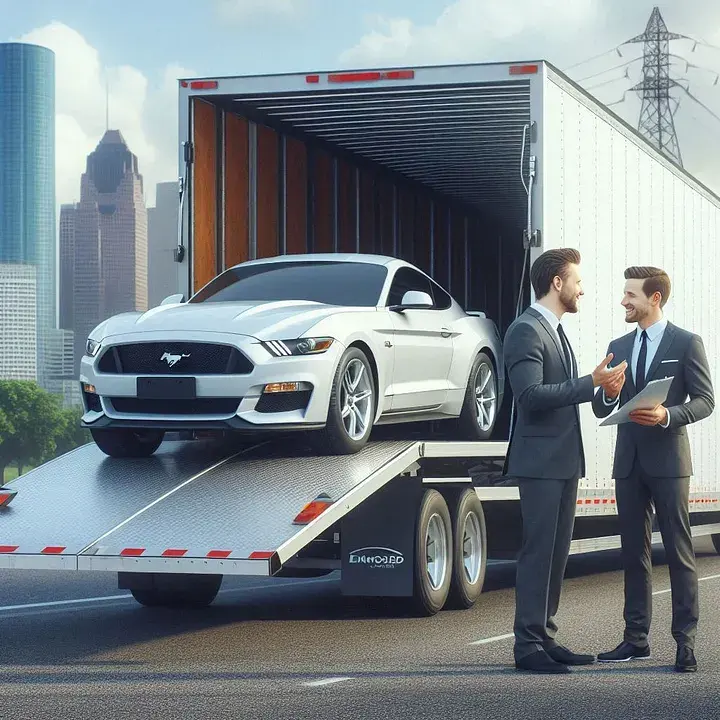
Open auto transport loads your vehicle onto an exposed multi-level or single-level trailer alongside other vehicles. The trailer has no roof or walls. Your car is fully secured with straps but exposed to road conditions — wind, rain, dust, and the occasional stone kicked up by passing trucks. Enclosed transport places your vehicle inside a sealed trailer — either hard-sided aluminum or soft-sided fabric-walled. Both methods use professional tie-down equipment, both are federally regulated under FMCSA carrier requirements, and both come with cargo insurance. The difference is purely physical: one shields your car, one does not.
Enclosed Auto Transport: Maximum Protection
Open transport is how the auto industry moves vehicles at scale. Every Ford, Toyota, and BMW sitting in a dealership lot almost certainly arrived on an open carrier. Manufacturers ship brand-new vehicles this way because statistically, damage rates are extremely low — under 0.5% of shipments according to industry data from the American Trucking Associations. For open auto transport, the advantages are clear: vastly more carrier availability, faster pickup windows, and lower prices driven by competitive carrier bidding. Because carriers load 6–10 vehicles per trip, the per-vehicle operating cost is shared. A cross-country open transport typically runs $800–$1,200 depending on distance, seasonality, and vehicle size. Despite being exposed, vehicles are strapped at four to six DOT-compliant tie-down points, and drivers document every existing scratch and dent before loading.
Cost Comparison: What You Actually Pay
For certain vehicles, enclosed auto transport is not an upgrade — it is the only appropriate option. Your vehicle travels inside a sealed environment: no rain reaches the paint, no highway gravel chips the front bumper, no UV exposure degrades a fresh custom respray. Enclosed carriers also attract the most experienced drivers in the business. Operators who invest in this equipment specialize in high-value freight and take additional precautions as standard practice — softened straps to prevent paint contact, wheel nets instead of hooks, and vehicle photography at every stage. Hard-sided aluminum trailers provide the highest level of protection. Soft-sided fabric trailers protect against weather and debris but offer slightly less impact resistance. For concours-level restorations or vehicles where insurance requires enclosed shipping, hard-sided is worth specifying.
Which Option Fits Your Situation
The price gap between open and enclosed is real but often overstated. On a Los Angeles to New York route (approximately 2,800 miles), open transport runs $1,050–$1,350 and enclosed runs $1,600–$2,100. Chicago to Miami (approximately 1,380 miles): open $750–$950, enclosed $1,150–$1,500. Dallas to Denver (approximately 920 miles): open $600–$800, enclosed $900–$1,200. The enclosed premium typically runs 40–65% above open pricing. One factor most customers overlook is their existing insurance policy. Some collector car insurance products (including Hagerty, Grundy, and American Collectors Insurance) specifically require enclosed transport for covered shipments. Check your policy before assuming open is acceptable.
Vehicles That Should Always Ship Enclosed
A practical decision framework: choose open transport if your vehicle is a daily driver, SUV, truck, or standard passenger car with a value under $40,000, or if you need fast pickup within 24–48 hours. Choose enclosed transport if your vehicle is a luxury, exotic, or classic car with significant monetary or sentimental value, if it has a fresh paint job or show-quality finish, if your insurance policy specifies enclosed shipping, or if the route passes through regions with extreme weather. Pre-1980 classics with lacquer or single-stage enamel paint, modern exotics with low ground clearance requiring hydraulic liftgates, and custom show vehicles all warrant enclosed transport. High-value motorcycles over $20,000 should also use enclosed crating available through our motorcycle shipping service.
Questions to Ask Before You Book
Before booking with any carrier, confirm these details: the cargo insurance limit and whether your vehicle's value falls within coverage; whether the driver is the carrier or the shipment is brokered; what the Bill of Lading inspection process involves; how delay communication is handled; and whether the quoted price includes door-to-door service. At Origa, we provide driver contact information before pickup, maintain vetted carrier relationships, and handle these details transparently. For the overwhelming majority of shipments — standard cars, SUVs, trucks — open auto transport is entirely safe. For vehicles where condition is critical, enclosed removes all external variables. If you are still unsure after reading this, call us at (754) 315-5980 and we will give you a straight answer for your specific vehicle.